guide
First-Time Vietnam Airport Tips for New Arrivals
What actually surprises first-time visitors landing in Vietnam - the language barrier, cash, SIM cards, and how to get a fair taxi without guesswork.
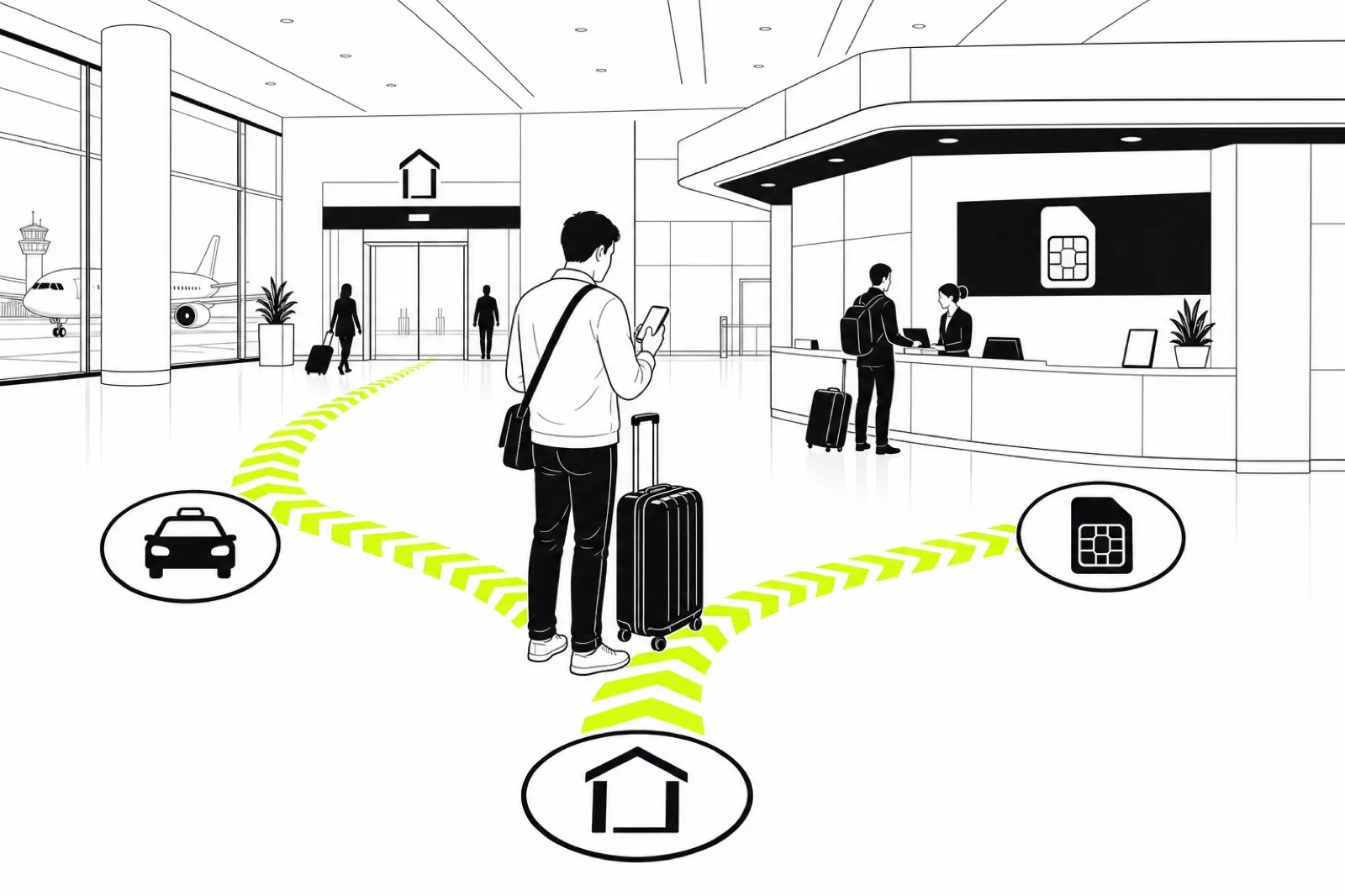
The gap between guidebooks and the arrivals hall
Most first-trip advice about Vietnam covers the country. Almost none of it covers the twenty minutes right after you land, which is where a surprising number of small, avoidable problems happen. None of them are dangerous. Most are just disorienting enough to sour the first hour of a trip that was supposed to start well.
Signage helps less than you’d expect
Vietnamese airports post English signage for immigration, baggage, and customs, and it is generally adequate for the main flow. Where it thins out is the branching decisions: which currency counter has a fair rate, which taxi rank is the official one, where the SIM card desk actually is versus where touts are standing near one. Airport staff working the public hall may have limited English, and a tired traveller who has just stepped off a long flight is not at their sharpest for working through that with hand gestures. If any of that sounds like more friction than you want to manage alone, a meet-and-greet service exists specifically to take that first hour off your list.
Cash and cards, sorted before you need them
Have a small amount of local currency before you leave the terminal, even if you plan to rely on cards for most of the trip - taxis, small vendors, and tipping still lean cash-first in Vietnam. Airport currency counters are convenient but not always the sharpest rate; if your bank card works well abroad, an ATM inside the terminal after baggage reclaim is often a better trade-off than a large currency exchange right at arrivals. Either way, do this before you walk out to the kerb, not after.
SIM cards and getting online
A local SIM or an eSIM solves more problems in the first day than almost anything else - maps, ride-hailing apps, translation, and a way for anyone meeting you to reach you if plans shift. Airport SIM counters exist at the main international terminals and are the easiest place to sort this while you’re already going through the motions of arrival, even though the price is rarely the cheapest you’ll find in the city.
Taxis without the guesswork
The single most common first-timer complaint is a taxi that costs far more than it should. The fix is simple and worth memorising: use the marked official taxi rank or a ride-hailing app rather than accepting an offer from someone approaching you inside the hall, and if you’re taking a metered taxi, watch that the meter is actually running from the start. None of this requires local knowledge you don’t have yet - it just requires knowing the pattern before you land. Full walkthroughs of what arrivals looks like terminal by terminal are in the Tan Son Nhat and Noi Bai guides.
Entry paperwork
Sort out your entry paperwork through official government channels before you travel, not at the airport. No private assistance service can obtain, expedite, or influence that paperwork - it is handled entirely between you and the immigration officer at the counter, and that stays true no matter what help you’ve arranged for the rest of the arrival.
When it’s worth arranging help in advance
Not every first trip needs an assistant, and plenty of independent travellers land, work through the steps above, and are fine. Where it tends to pay off is a late-night landing, a connecting flight into a second Vietnamese city, or simply wanting one thing that isn’t a decision on day one of a big trip. The assistance services guide covers what’s actually on offer and who each option suits, so you can decide before you fly rather than while you’re standing in the hall working it out.
The short version
Carry a little cash, sort a SIM early, use the official taxi rank, and have your entry documents ready before you reach the immigration hall. Everything else about a first trip to Vietnam is easier than people expect - it’s usually just that first half hour that needs a plan.