guide
Noi Bai Airport Arrival Guide, Hanoi
What landing at Noi Bai in Hanoi actually involves, from the jet bridge to the road into the city, and where help matters most along the way.
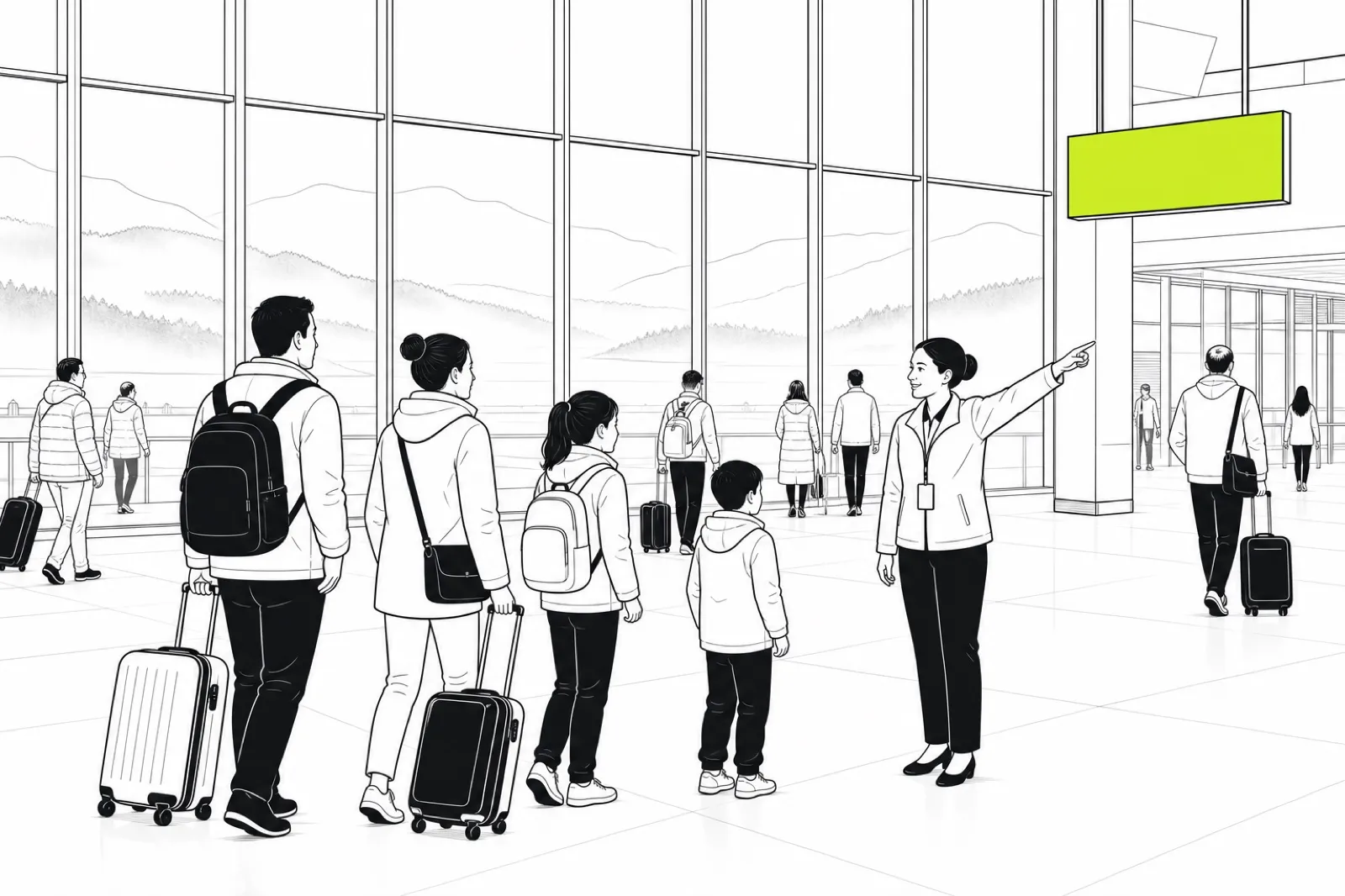
Touching down in Hanoi
The seatbelt sign goes off, the aisle fills, and everyone on an international flight into Hanoi funnels into the same building: Terminal 2, the international terminal at Noi Bai, set apart from the domestic side of the airport. For a traveller who has never landed in Hanoi before, the first few minutes are mostly about following the crowd — arrivals signage is consistent, but a jet-lagged brain reading unfamiliar layout for the first time is exactly when small confusions add up.
From the gate to passport control
The route to immigration is well marked but can be a genuine walk in a terminal of this size, and at peak arrival windows the corridor fills with several flights’ worth of passengers moving at the same pace. Anyone travelling with young children, an elderly relative, or simply a lot of hand luggage tends to feel this stretch the most — it is the part of the journey where an escort meeting the flight does the most good, mostly by removing decisions rather than by moving anyone faster.
Immigration and baggage, back to back
These two steps sit close together at Noi Bai and are worth thinking about as one stretch rather than two separate stops. At the immigration hall, entry documentation should already be in hand and organised — arranged in advance through official government channels, never at the counter — and the officer on duty makes every decision, with no service able to change that. Once through, baggage reclaim is a short walk further into the terminal; screens map flights to belts, though during busy periods bags can take a while to appear, and there is no honest way to promise a specific wait. A porter with a trolley removes the physical strain of the wait for anyone with heavy or awkward items — porter and baggage help covers what that specifically includes.
Customs, then the doors
Vietnam’s green-and-red channel system applies at Noi Bai exactly as it does everywhere else in the country: travellers with nothing to declare inside the published allowances use the green channel, where screening is only occasional, while anything requiring declaration goes through red. Current allowance limits sit with Vietnamese customs directly and are worth confirming ahead of the trip for anyone carrying significant cash or goods. Clearing that final checkpoint puts a traveller through the last set of doors and into the public arrivals hall — the point where the trip officially starts to feel like Vietnam rather than an airport.
The road into Hanoi
Noi Bai sits a real distance from central Hanoi, long enough that the ride into the city is its own decision rather than an afterthought — taxi ranks, ride-hailing pickup points, and pre-booked drivers all operate from different parts of the same arrivals area, and picking the wrong one after a long flight wastes time nobody wants to spend standing around. Arranging a car before departure, with a named driver and a fixed meeting point rather than “somewhere at arrivals,” tends to be the least stressful option; how airport transfers are usually set up covers the practical side of booking one.
When it’s worth having help
Not every traveller needs an escort through this sequence, and plenty of people manage it fine on their own with no local language at all. Where it tends to matter is a specific set of situations: parents or grandparents flying without family alongside them, families landing with toddlers and no free hands, wheelchair users wanting more than the standard airline service provides, or anyone whose connecting flight leaves little margin for a slow immigration queue. Anyone facing a long wait at Noi Bai before a connection will find that its own separate concern, covered on its own page.