guide
Tan Son Nhat Airport Arrival Guide
A walkthrough of landing at Tan Son Nhat in Ho Chi Minh City, from the gate to the taxi rank, and where an escort makes the biggest difference.
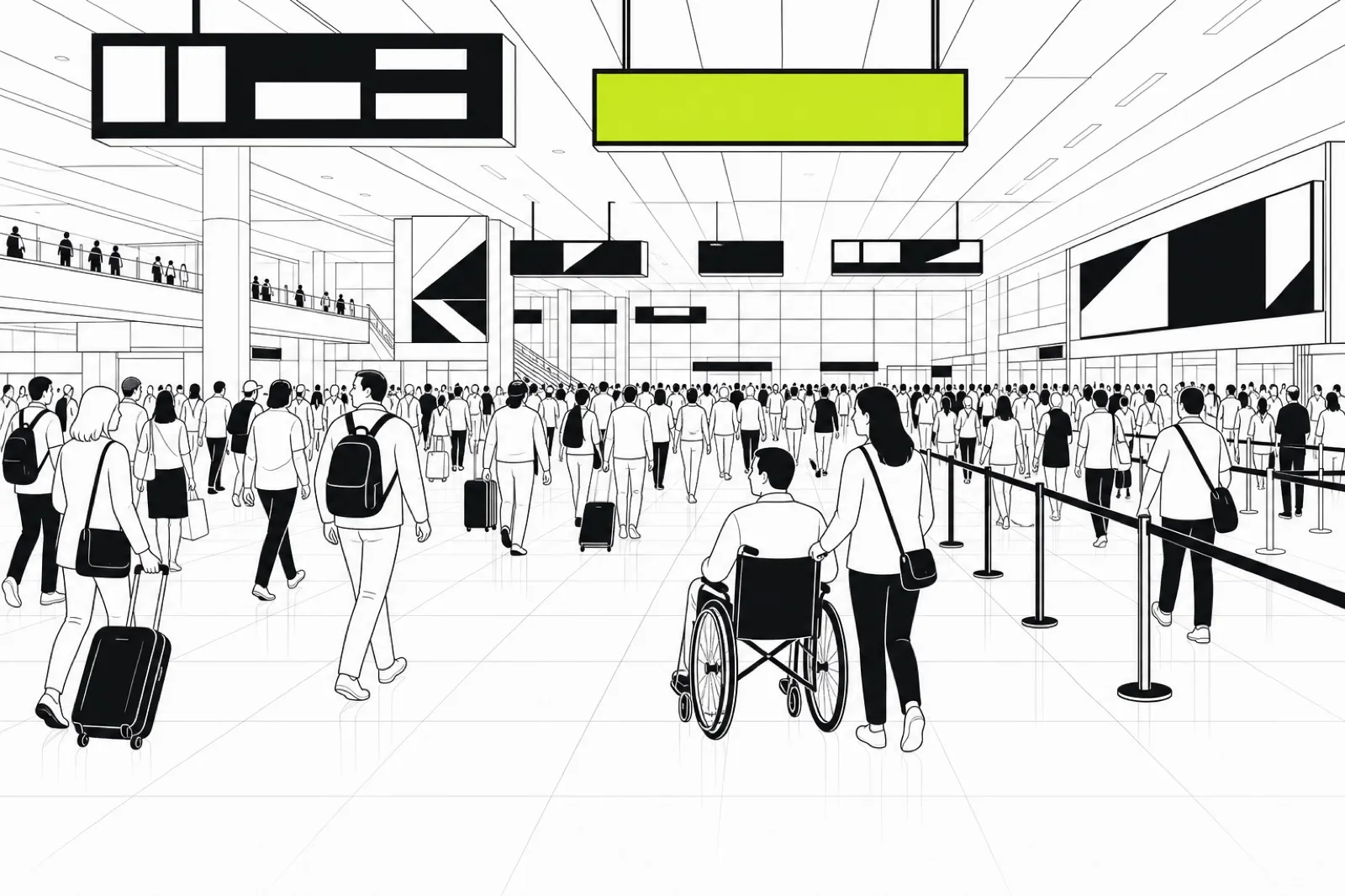
Landing at Tan Son Nhat
International flights into Ho Chi Minh City arrive at Terminal 2, a separate building from the domestic Terminal 1 and the newer Terminal 3 that now handles domestic traffic. That separation matters mainly for anyone connecting onward or being met by someone who has driven to the wrong terminal — worth confirming before the flight lands, not after.
The walk to the immigration hall
From the jet bridge, arrivals signage routes everyone down toward passport control. The distance is manageable by regional standards but not short, and at busy periods — several wide-body flights landing close together is common in the evening — the corridor itself can feel crowded well before the immigration hall comes into view. This is the stretch where an assistant meeting a traveller at the gate earns its keep most plainly: someone unfamiliar with the building, travelling with children, or simply exhausted after a long flight has one less decision to make about which way to walk.
Immigration
Have entry documentation ready in hand before joining a queue — sorted out through official government channels well ahead of the trip, not at the counter. Queue length and pace depend heavily on how many flights have landed in the same window; there is no honest way to predict wait times in advance, only to say that early morning and late evening tend to be busier. An escort’s role here is limited and clear: pointing to the right line, keeping a family group together, and making sure documents are organised. No traveller bypasses that judgment — the counter officer decides each case individually, without exception.
Baggage reclaim
Screens above each belt map flights to numbers, though during a busy period more than one arriving flight can be assigned belts near each other, which adds to the general crush. Bags from long-haul flights sometimes take a while to appear, particularly the first pieces off a full aircraft — patience is the main requirement, and a porter with a trolley solves the physical part of the wait if bags are heavy or numerous. Porter help specifically is its own topic worth reading if a group is travelling with oversized items or a lot of luggage.
Customs
Vietnam runs the standard green-channel, red-channel system at every international airport. Nothing to declare and within the published allowances: green channel, typically a walk-through. Carrying goods that need declaring: red channel. Current allowance figures are published by Vietnamese customs directly and are worth checking ahead of travel for anyone carrying meaningful amounts of cash, alcohol, tobacco, or commercial goods.
Stepping out: the public hall and the pickup zone
Beyond customs, the doors open onto a hall that can be genuinely overwhelming on a first visit — driver boards, ride-hailing pickup points, families reuniting, and a wall of noise after a quiet flight. If someone is meeting a traveller in person, agreeing an exact, named meeting point before departure avoids the common problem of two people both standing “near the entrance” on opposite sides of a crowd. For anyone arranging a car in advance rather than relying on the taxi rank, transfer coordination covers how that side of the trip is usually set up.
If something needs an extra hand
None of the above changes for a traveller who books assistance — the immigration officer still decides, the customs channel still applies equally, and no queue moves faster because someone is being escorted through it. What changes is everything around those moments: fewer wrong turns, one less thing to carry, and a familiar face at a point in the trip when most people are running on very little sleep. First-time visitors in particular tend to underestimate how disorienting a large unfamiliar terminal feels after a long-haul flight — the first-trip guide goes into what tends to catch people off guard beyond the arrival sequence itself.