guide
What to Do About Lost Baggage in Vietnam
Your bag didn't come out on the belt at a Vietnamese airport. Here is exactly what to do next, in order, before you leave the arrivals hall.
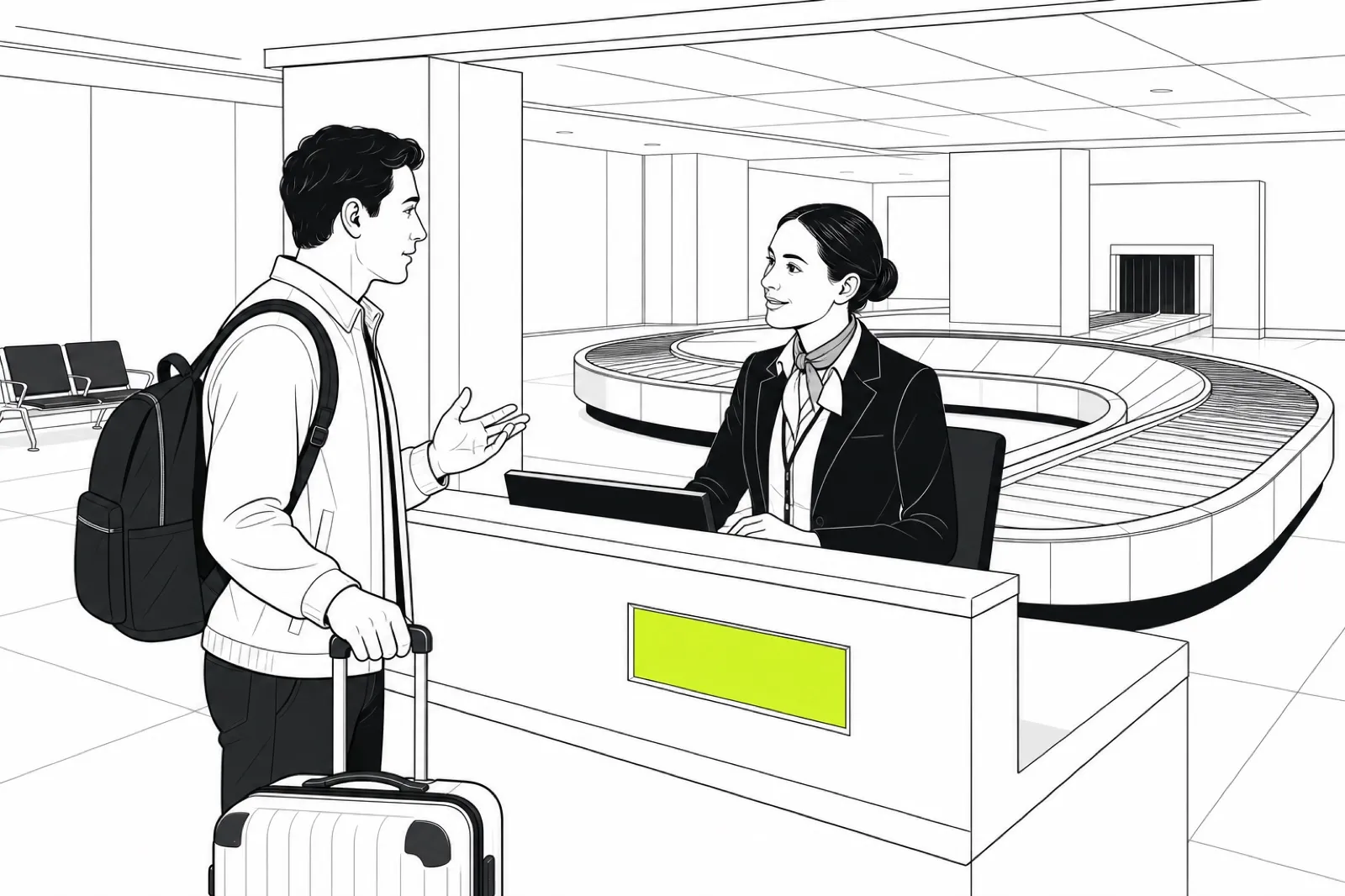
First, confirm it’s actually missing
Wait until the belt has genuinely stopped and the hall has thinned before concluding a bag is missing - bags from a single flight can come out unevenly, especially oversized items that route to a separate point. Check any nearby oversize claim area before assuming the worst. Once you’re confident the bag isn’t coming, act before you leave the arrivals hall, not after, while you’re still inside the terminal where the right desk is.
Find the baggage service desk
Every major Vietnamese international terminal has a baggage service desk, usually positioned near the exit from the reclaim hall, staffed by the airline or its ground handler rather than the airport itself. This is where a delayed or missing bag gets reported, and it’s a different counter from anything to do with customs or entry documents. If you can’t locate it, airport staff nearby can point you to it - it’s a common enough question that most know exactly where to send you.
Filing the report
You’ll need your baggage claim tag, boarding pass or booking reference, and a description of the bag. The desk issues what’s usually called a Property Irregularity Report, which is your reference number for everything that follows - photograph it before you leave, and keep the physical copy too. Give a delivery address in Vietnam if you have one settled already; if you don’t yet, most desks can take a follow-up contact instead and let you confirm an address once you’ve arrived at your hotel.
What happens next
Most delayed bags surface within a day or two and are delivered to wherever you told the airline to send them, though timelines vary by airline and route and nobody can honestly promise a fixed number of hours. Keep the essentials - documents, medication, a change of clothes - in your carry-on precisely because this happens occasionally and is rarely predictable in advance. If you don’t hear anything within the window the airline gave you, following up directly with the reference number from your report is more effective than waiting.
If you’re connecting on to another city
Travellers landing at one Vietnamese airport and continuing on to another sometimes find a bag simply didn’t make the connection. The same report-and-track process applies, but you’ll want the delivery address to be your final destination, not the first airport - make that clear at the desk, since it’s not always the default assumption.
Where language becomes the real obstacle
The paperwork itself is usually available in English at the main international terminals, but the follow-up - a phone call to check status, a description of exactly which bag among thousands - is where a language barrier turns a minor inconvenience into a frustrating one. This is one of the more concrete places where in-person assistance earns its place: someone who can sit with you at the desk, help phrase the report accurately, and follow up in Vietnamese if a call is needed later. See the meet-and-greet page for how that’s typically arranged, and the full assistance guide for how it fits alongside porter and transfer help if your trip already has other moving parts, like the porter and baggage help that covers the rest of your bags while this one gets sorted.
What no one can do for you
No assistance service, however good, can make an airline find a bag faster than its own tracking system allows, and nobody should claim otherwise. What good assistance actually changes is how manageable the process feels while you wait - fewer wrong counters, less repeating yourself, and someone in your corner if a language barrier makes a routine form frustrating.
The short list
Confirm the bag is genuinely missing, find the baggage service desk before you leave the hall, get and photograph your report number, keep essentials in your carry-on for exactly this reason, and follow up using the reference number if you don’t hear back in the window you were given.