guide
Porter and Baggage Help at Vietnamese Airports
Porters, trolleys, oversized luggage and sports equipment at Vietnamese airports - what's available, what it costs in effort, and when to arrange it ahead.
A family flying in with two suitcases, a car seat, and a jet-lagged toddler needs a different kind of help at baggage reclaim than a solo traveller with a backpack. Both are common at Vietnamese airports; only one of them usually thinks to plan for it.
What porter services actually cover
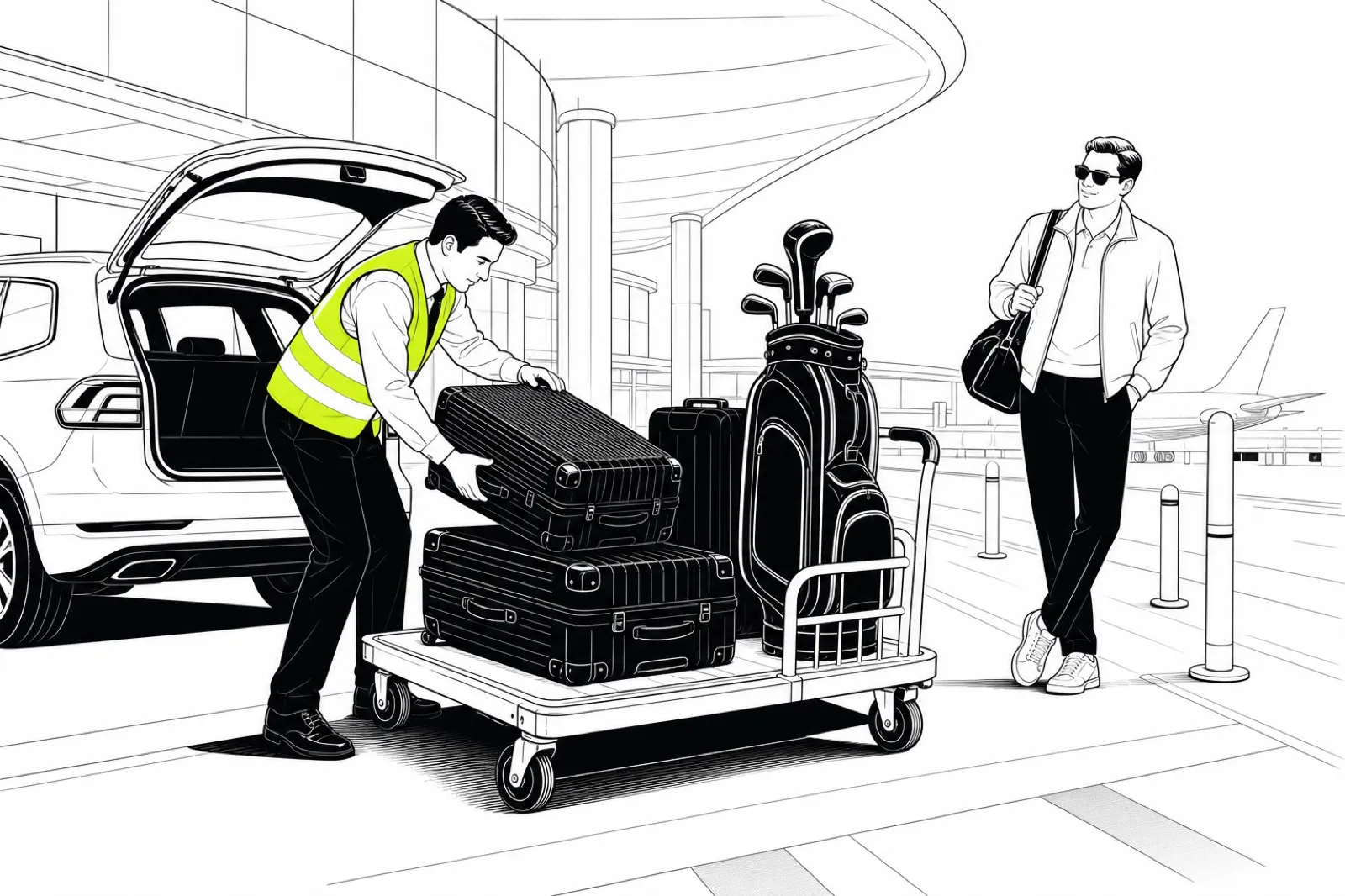
Porters at the main Vietnamese international terminals move bags from the belt to the kerb, help load a vehicle, and generally save the physical labour of managing a full trolley through a crowded hall while also trying to find whoever is meeting you. It’s a narrow job done well, not a substitute for immigration or customs help - those steps stay entirely between you and the officer at each counter regardless of who’s carrying your bags.
Trolleys are free, finding one isn’t always
Baggage trolleys are provided at no charge at the main terminals, but availability during a busy arrivals wave can thin out fast, and trolleys often cluster near the belts rather than near the doors, which means a walk against the flow of a crowded hall to find one. This is a small thing until you’re doing it one-handed with a bag already over your shoulder.
Oversized and awkward items
Sports equipment, musical instruments, and oversized checked bags usually come out on a separate oversize belt or get delivered to a counter rather than the main carousel, and finding that counter in an unfamiliar terminal is its own small task. If you’re travelling with diving gear, a bike case, or anything else that doesn’t fit a standard trolley, arranging a porter in advance means someone is already watching for exactly that item rather than you working out where oversize claim is after everyone else has cleared the hall.
Moving a lot of bags, not just heavy ones
Volume is its own problem separate from weight. A family relocating for an extended stay, a group travelling with shared equipment, or anyone checked in with more bags than hands can comfortably manage benefits less from strength and more from an extra set of hands who already knows the terminal layout. That’s a different need than the elderly or mobility-limited travellers covered in the wheelchair and mobility guide - it’s about logistics rather than physical ability, though the two can obviously overlap.
Booking ahead versus flagging someone at the belt
Independent porters and trolley staff do work the halls at busy Vietnamese airports and can be engaged on the spot, but availability and language ability vary by the hour, and there’s no way to confirm someone will be free when your specific flight lands. Arranging a porter as part of a meet-and-greet booking means a named person is waiting at your belt before the bags start moving, which matters most exactly when you need it most - a late landing, a big group, or luggage you can’t easily leave unattended while you go looking for help.
What a porter doesn’t solve
A porter moves bags. If a bag doesn’t come out on the belt at all, that’s a different process entirely, handled at the airline’s baggage service desk rather than by anyone carrying luggage through the hall - the full steps are in the lost or delayed baggage guide. It’s worth knowing the difference before you land, so you’re not looking for the wrong kind of help at the wrong counter.
The practical takeaway
For a single bag and a short walk to a taxi, most travellers manage fine without help. Once the load includes oversized items, a group, or family members who can’t carry their own share, arranging a porter ahead of time turns what could be twenty stressful minutes into a short walk someone else has already planned for. The assistance services guide lays out how porter help fits alongside the rest of what’s available.