guide
Da Nang Airport Arrival Guide, Terminal to Kerb
What actually happens between touchdown and the taxi rank at Da Nang's international terminal, and where a spare pair of hands earns its keep.
An airport with two very different sides
Da Nang serves both domestic hops around Vietnam and a growing list of direct international routes, and the two flows barely touch once you’re off the aircraft. International arrivals move through a dedicated terminal building built specifically for that traffic, separate from the domestic side most Vietnamese travellers use. If you’ve flown in from overseas, everything described below is the path you’re already on — you don’t need to think about the split, but it explains why the building can feel quieter or busier than you’d guess from flight numbers alone.
The walk to passport control
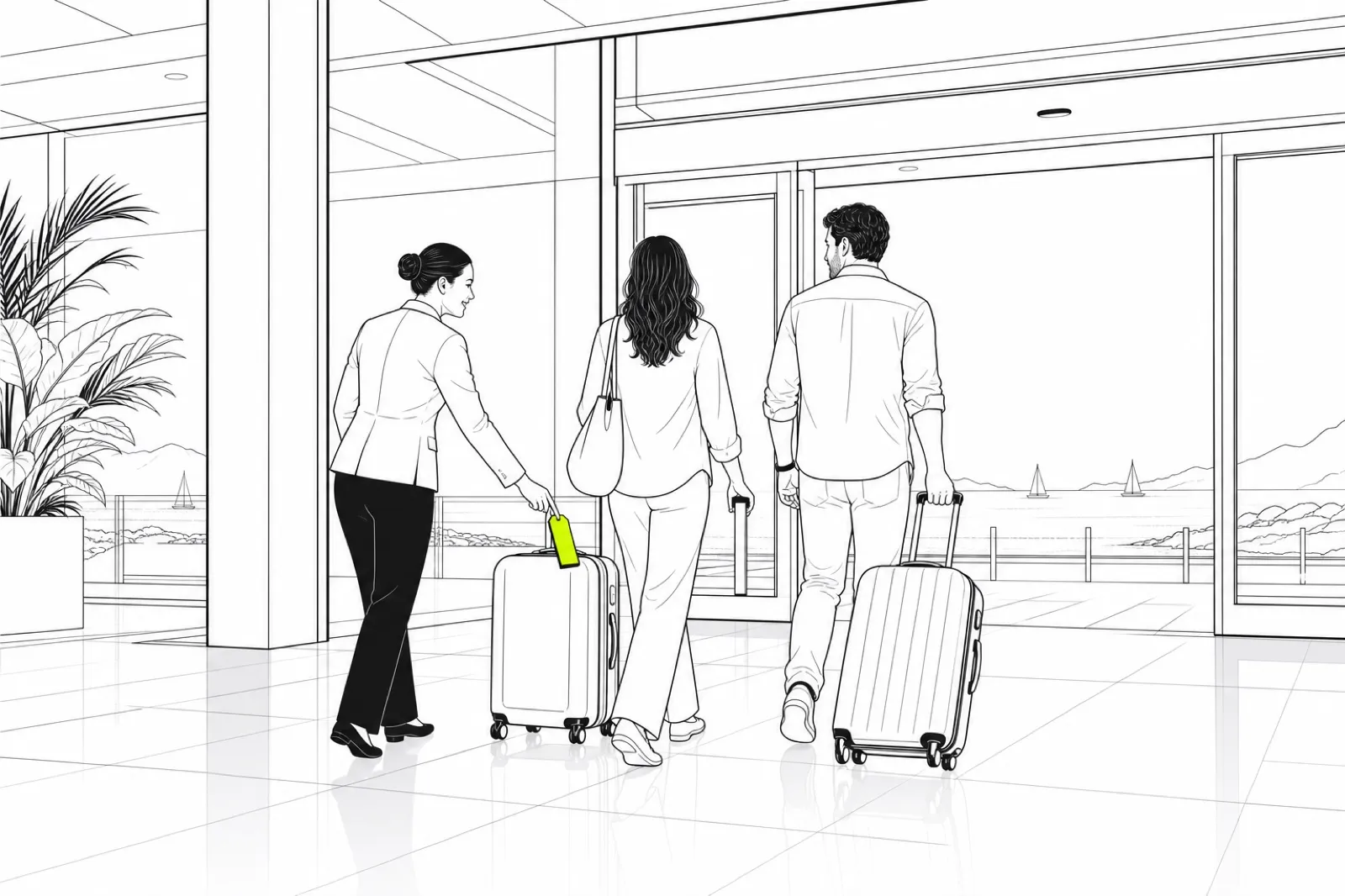
From the jet bridge or apron bus, signage routes you toward immigration in a fairly direct line — this isn’t a sprawling megahub, and the walk is shorter than at Vietnam’s two biggest gateways. That’s a genuine advantage for anyone travelling with a toddler in tow, a bag on each shoulder, or a knee that doesn’t love long corridors. Where the walk still catches people out is the pace of it: after a long-haul sector, the brain is slower than the legs, and it’s easy to drift past a wayfinding sign without registering it. An escort arranged in advance waits at the gate specifically so that decision never has to be made solo.
At the immigration counter
Have your passport and any entry documentation you’ve already sorted through official government channels ready before you reach the desk — fumbling for paperwork at the counter is the single biggest thing that slows a queue for everyone behind you. Counter numbers open and close depending on how many flights have landed close together; a quiet mid-week arrival can clear in a few minutes, while three wide-bodies landing within an hour of each other stretch the wait considerably. The officer reviews your documents and makes the call, every time, for every traveller — no service changes that, and none should.
Baggage reclaim
Screens above the belts list which flight is on which carousel, and Da Nang’s terminal is compact enough that you’re rarely walking far to find yours. The wait itself depends on how the ground handlers are running that shift, not on anything happening in the terminal building. If you’re carrying oversized items — surfboards, golf bags, a stroller checked at the gate — this is the point where an extra set of hands matters most, and it’s worth reading up on porter and baggage help before you fly if you know you’ll be loaded down.
Customs, without the drama
Vietnam runs the standard green-channel, red-channel system at every international airport, Da Nang included. Nothing to declare and within the personal allowances: take the green channel, which is usually a straightforward walk with occasional random checks. Carrying goods over the allowance, or unsure whether something needs declaring: take the red channel and let the officer sort it. Current allowance figures are published by Vietnamese customs directly — check those if you’re bringing back anything of real value.
Stepping out into the arrivals hall
The doors open onto a public hall that’s smaller and easier to read than Ho Chi Minh City’s or Hanoi’s, which is a mercy on a first visit — but it still fills with drivers holding name boards, families reuniting, and tour groups clustering around a guide’s raised sign. If someone is meeting you, agree on a specific, named spot beforehand rather than “outside arrivals,” and consider how you’re getting into the city before you land rather than after; a look at transfer options from Vietnamese airports beats working it out cold in a crowded hall.
Where a hand genuinely helps
Da Nang is one of the friendlier airports in the country to navigate solo — shorter walks, a single clear terminal, fewer of the wrong-turn traps that trip people up elsewhere. Assistance still earns its place for travellers who’d rather not manage documents, bags, and a confusing hall all at once after a long flight: someone flying alone for the first time, a parent juggling a child and a car seat, anyone who simply wants one less decision to make on landing. For everyone else, it’s a genuinely manageable airport to walk through on your own steam.