guide
Getting From a Vietnamese Airport to the City
How travellers get from a Vietnamese airport to the city - pre-booked drivers, ride-hailing apps, the taxi rank, and where the handover usually goes wrong.
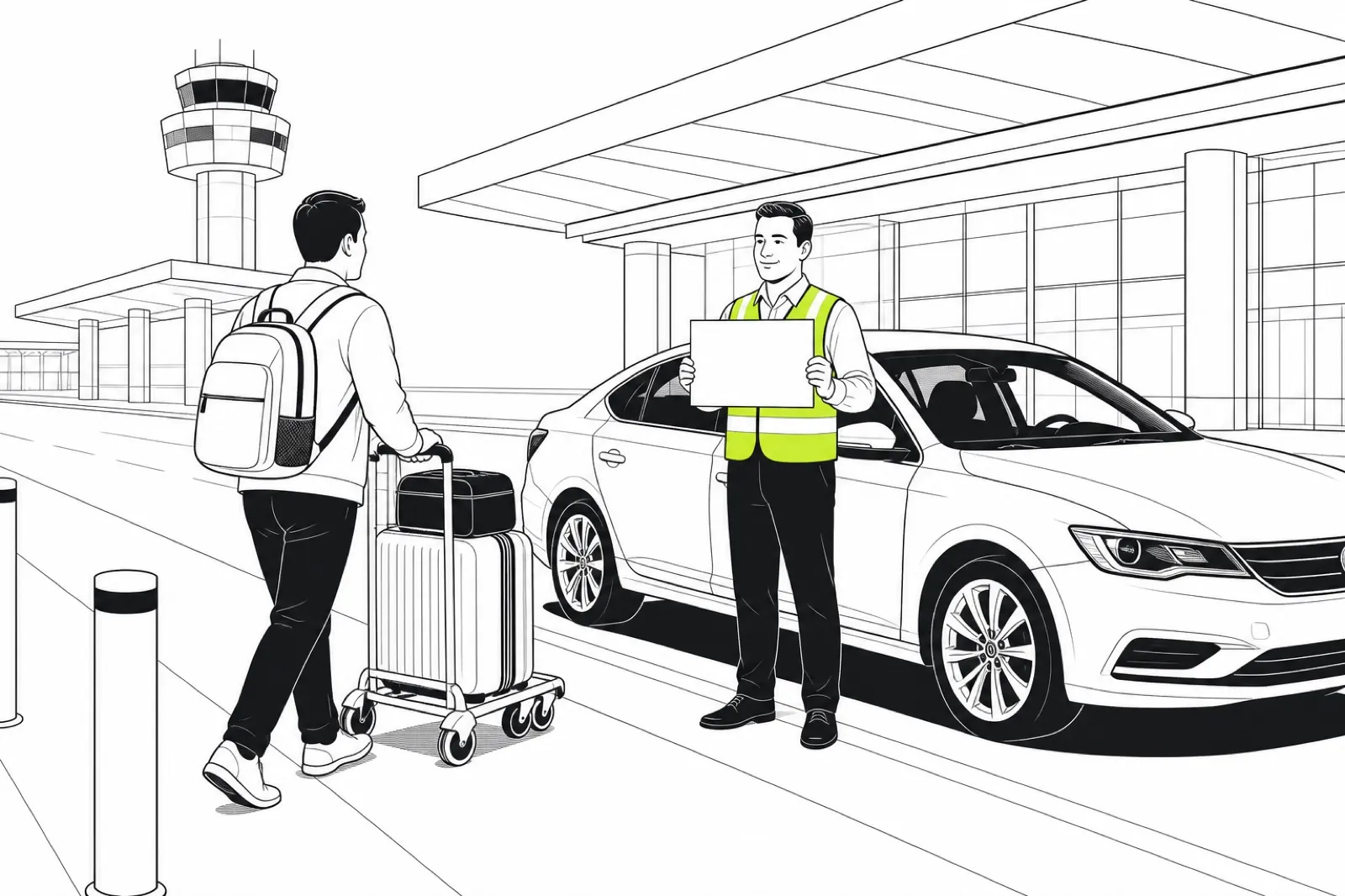
The three ways to leave the airport
At every Vietnamese international airport, you leave the arrivals hall by one of three routes: a driver booked before you flew, a ride-hailing app opened once you have signal, or the taxi rank outside the doors. Each works. The difference is how much of the decision you make in advance versus in the arrivals hall itself, tired, jet-lagged, and surrounded by drivers holding signs for other people.
Booking a driver before you fly
A pre-arranged transfer removes the arrivals-hall decision entirely. A flight number is given in advance, a driver is placed for that flight, and the only task left on landing is finding the named meeting point. This matters most after an overnight flight, with young children in tow, or on a first visit when the layout of an unfamiliar terminal adds friction to a task that should take five minutes. See meet-and-greet-explained for how a booked pickup usually pairs with someone walking you out of the terminal rather than simply waiting at the kerb.
Ride-hailing apps at Vietnamese airports
Ride-hailing apps operate at Vietnam’s major airports, and coverage is generally reliable once a working SIM or roaming data is in hand. The friction is procedural rather than technical: airports designate specific pickup zones for app-based rides, separate from the taxi rank, and the app’s pin can sit some distance from where the car actually waits. First-time users often circle the terminal trying to reconcile a map dot with a real pickup zone; regulars know to follow the airport’s own signage rather than the app alone.
The taxi rank, and how to use it safely
The taxi rank is the default for travellers without a booking or working data. Use only marked taxis from the official rank, confirm before the car moves that the meter will be used, and keep luggage claim tags until every bag is loaded. Unmarked drivers who approach inside the terminal before the rank is reached are the main thing worth avoiding — a legitimate taxi does not need to solicit passengers past the doors. Travellers carrying several bags or oversized items may find vietnam-airport-porter-and-baggage-help worth reading before the trip, since loading a taxi safely is easier with a spare pair of hands.
Meeting points that actually work
“Meet you outside” fails at a large terminal, because outside can mean two hundred metres of kerb split across arrival levels, exits and construction. Agree a specific point instead — a numbered exit, a named cafe, a departures-level bridge — and confirm it again once signal returns after landing, since gate assignments and terminal layouts shift more often than travellers expect. Ho Chi Minh City’s Tan Son Nhat, for instance, splits pickup by terminal and level in ways a printed map does not always make obvious; the tan-son-nhat-arrival-guide walks through the layout in more detail. If someone unfamiliar with the airport is meeting you, this one detail prevents most of the confusion that follows a long flight.
What changes on a long-haul overnight arrival
Arriving in the small hours changes the calculation. Ride-hailing demand and driver availability both thin out overnight, the taxi rank queue moves differently with fewer staff on duty, and a traveller who has been awake for twenty hours has less patience for improvising a plan on the spot. This is exactly where a pre-booked transfer earns its keep, and where being met before baggage reclaim — covered in first-trip-to-vietnam-airport-tips — turns a tiring transition into a short, predictable walk to a waiting car. Whichever route suits the trip, deciding it before boarding beats improvising after landing.