guide
Unaccompanied Minors at Vietnam's Airports
What airline unaccompanied minor programs cover at Vietnamese airports, and what a private escort adds for parents who want an extra layer of care.
Before the ticket is booked
Every airline that carries children without a parent runs some version of an unaccompanied minor, or UM, program, but the details differ enough between carriers that assuming one airline’s rules apply to another is the most common mistake parents make. Age ranges, required paperwork, and whether the service is compulsory or optional for a given age band all vary by airline. The airline’s own UM desk is the first call to make, well before the departure date, not the day of travel.
At the departure airport
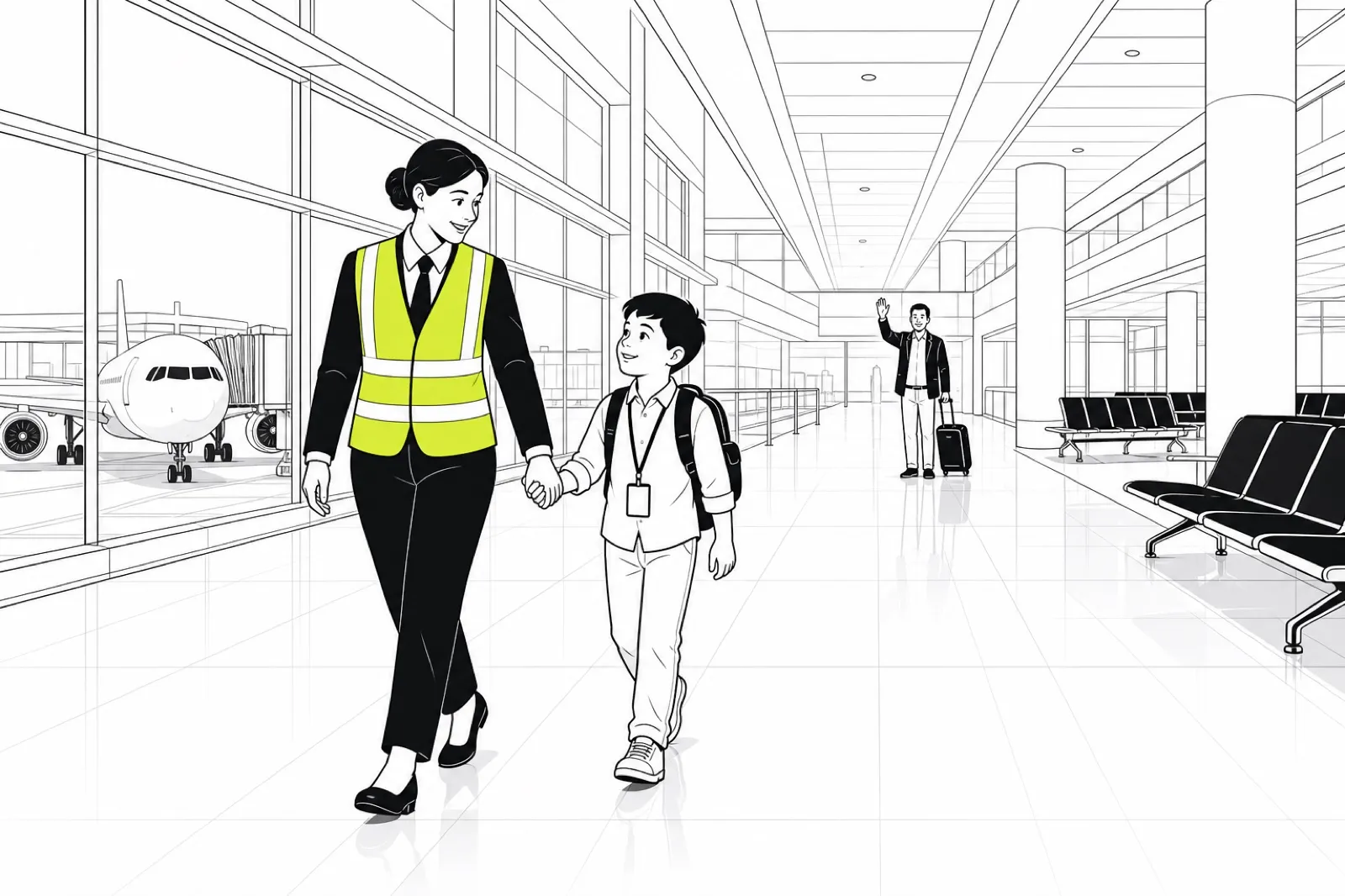
A UM passenger is typically checked in at a dedicated counter, issued an identifying lanyard or wallet, and handed between named staff at each stage — check-in, security, the gate, boarding. Parents or guardians usually complete a form naming exactly who is authorised to collect the child at the other end, and airlines generally will not release a UM passenger to anyone not named on it. Plan to arrive earlier than a standard departure; UM processing takes longer than ordinary check-in.
What happens in the air
Once on board, cabin crew are briefed on which seats hold UM passengers and check on them through the flight. This part of the journey is usually the one families worry about least, and it is the part airlines are most practised at — it is the two ends of the trip, on the ground, where a young traveller is most exposed to unfamiliar surroundings without a parent nearby.
Landing in Vietnam
At arrival, cabin crew hand the child to ground staff, who then move them through the terminal — immigration, baggage reclaim if applicable, and out to the arrivals hall — to be released only to the named collector. This is airport staff doing structured, high-volume work, and it is generally reliable. What it does not include is a familiar adult staying with the child for the entire route the way a parent would, or handling anything outside the strict UM handover procedure, such as a missed connection or a collector who is running late.
What private assistance adds
A private assistant booked alongside the airline’s UM service adds exactly that missing layer: someone present at the arrivals point as a second, known face for the child, able to help coordinate if the person collecting them is delayed, and staying until the handover is properly completed. It does not replace or override the airline’s own UM procedure — every airline keeps its own chain of custody for a UM passenger — but it gives a family in Vietnam a person on the ground watching that handover happen, rather than waiting for a phone call. Families coordinating a pickup for a child arriving alone may also find family arrival help useful for the collecting parent’s side of the day, and meet-and-greet explained covers how that waiting-and-escort role works more generally.
Questions worth asking the airline first
Before booking, confirm with the airline: the exact age range covered by their UM program, what documentation the collecting adult must bring and show at the airport, whether the service is available on every route the child is flying, and how the airline handles a delayed or cancelled connecting flight for a UM passenger travelling alone. The same handover-and-documentation logic applies on the way home; see departure assistance for how collecting a child departing Vietnam differs from meeting one on arrival.
Write the collecting adult’s full name, phone number and relationship to the child on the airline’s UM form exactly as it appears on their identification — a mismatch, even a minor one, is the most common reason a handover gets delayed at the arrivals point while staff confirm who is authorised to take the child.