guide
Departure Assistance at Vietnamese Airports
The departure version of meet-and-greet - kerb meeting, check-in, document checks, and an escort through to the gate area at Vietnamese airports.
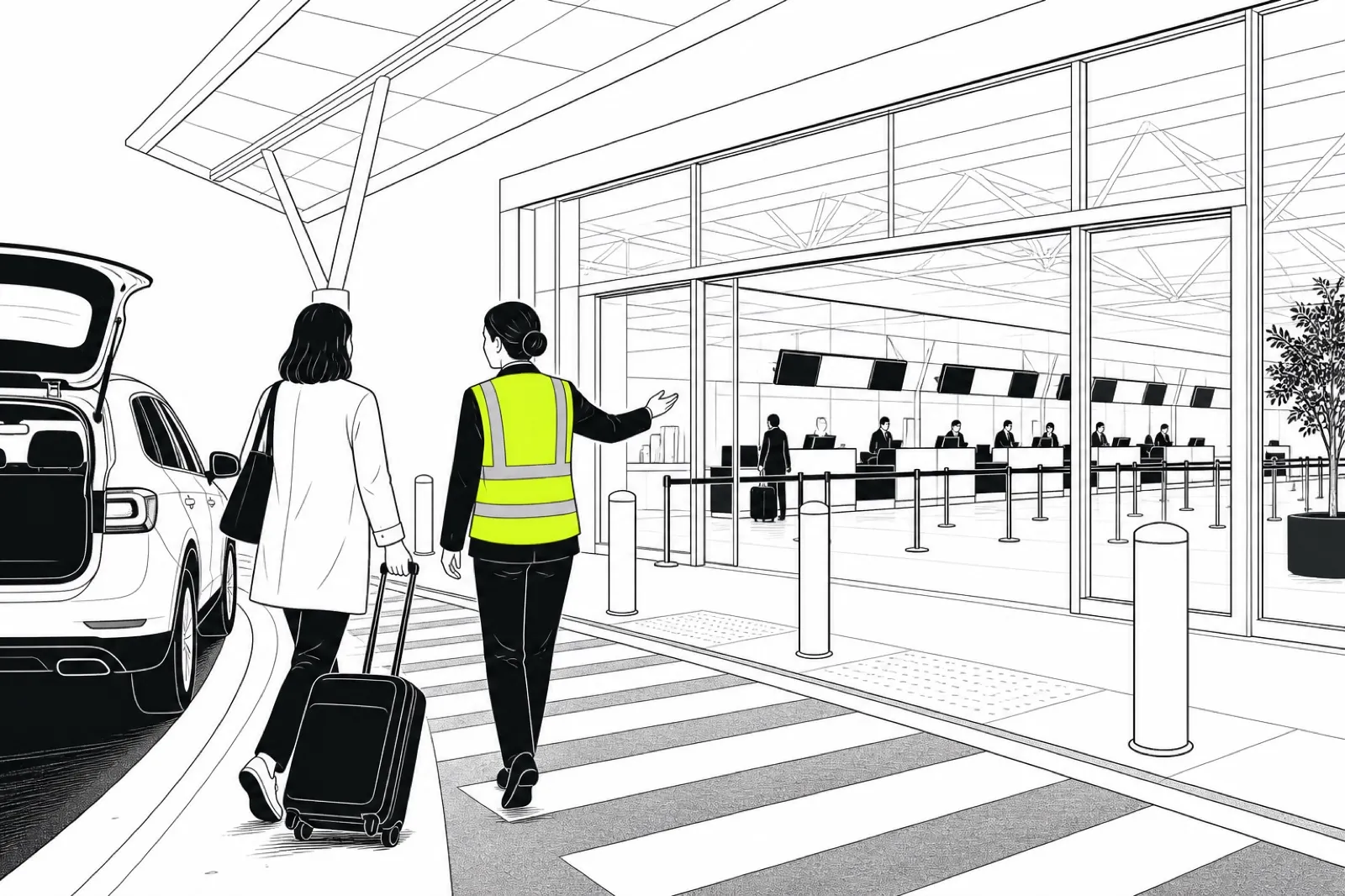
Arrival gets most of the attention in airport planning, but leaving Vietnam has its own pinch points - a check-in queue that moves slower than expected, a document check you weren’t quite ready for, a terminal that turns out to be bigger than the one you landed at. Departure assistance is built around exactly that stretch: from the kerb to the point where only ticketed passengers can go further.
Meeting at the kerb, not inside
A departure assistant typically meets you where your car or taxi drops you, at the terminal kerb, rather than waiting somewhere inside. That matters more than it sounds - drop-off zones at busy Vietnamese terminals can be long and poorly marked, and knowing exactly where to be met removes one more decision from a morning that’s usually already tight on time. Whoever is driving you can also be told the specific meeting point in advance, which the transfer arrangements guide covers in more detail if you’re still deciding how to get to the airport at all.
Check-in and bag drop
At a busy departure period, check-in queues at Vietnamese airports can back up significantly, particularly for popular routes departing around similar times. An assistant can help you find the right counter or self-service kiosk quickly, keep an eye on bags while you sort documents, and generally remove the low-grade stress of not being sure you’re in the right line - which matters most when a connecting flight or an appointment on the other end makes a delay costly.
Document checks, done properly
Airlines and airport staff check travel documents at several points before departure - at check-in, sometimes again before the security queue, and at the gate. Have your passport and any required paperwork organised and accessible before you reach the counter; get that groundwork done via the appropriate government channels before the trip, not at the airport. No assistance service can obtain, expedite, or influence that paperwork - what an escort does is make sure you’re carrying the right documents to the right checkpoint at the right time, and stand with you if a question comes up at any of them.
Through security to the gate area
Security screening in Vietnam follows the same standard steps as any international airport - bags through the scanner, a walk through the checkpoint, and the officer’s decision at every stage. A departure escort’s role here is entirely about the surrounding logistics: making sure you’re not rushing, that carry-on liquids and electronics are already organised the way screening expects, and that you know which direction to walk once you’re through. Nothing about that changes what the security officer does or decides.
Who this tends to help most
Departure assistance is most useful for travellers who benefit from not having to think several steps ahead on their own - an elderly parent flying solo (more in the guide for elderly travellers), someone with a mobility need who benefits from an escort as far as the gate area, or simply a traveller on an unfamiliar route with a tight connection elsewhere. It pairs naturally with the arrival version of the same service, covered in the meet-and-greet explainer, for round-trip peace of mind rather than just one leg of it.
Where the escort’s job ends
An assistant can walk with you as far as the gate area that ticketed passengers reach after security, but boarding itself and everything beyond the gate is between you and the airline. That boundary is worth knowing going in - departure assistance smooths the path to the gate; it doesn’t extend past it.
Planning it in advance
Because departure assistance depends on knowing your flight time and terminal ahead of the day, it works best arranged before you travel rather than found on the spot. The full assistance services guide sets out how a departure booking typically works alongside transfers or porter help if your day starts well before you reach the kerb.