guide
Cam Ranh Airport Arrival Guide for Nha Trang
Cam Ranh sits well outside Nha Trang itself, which changes the arrival calculus more than the terminal does. A walkthrough from landing to the coast road.
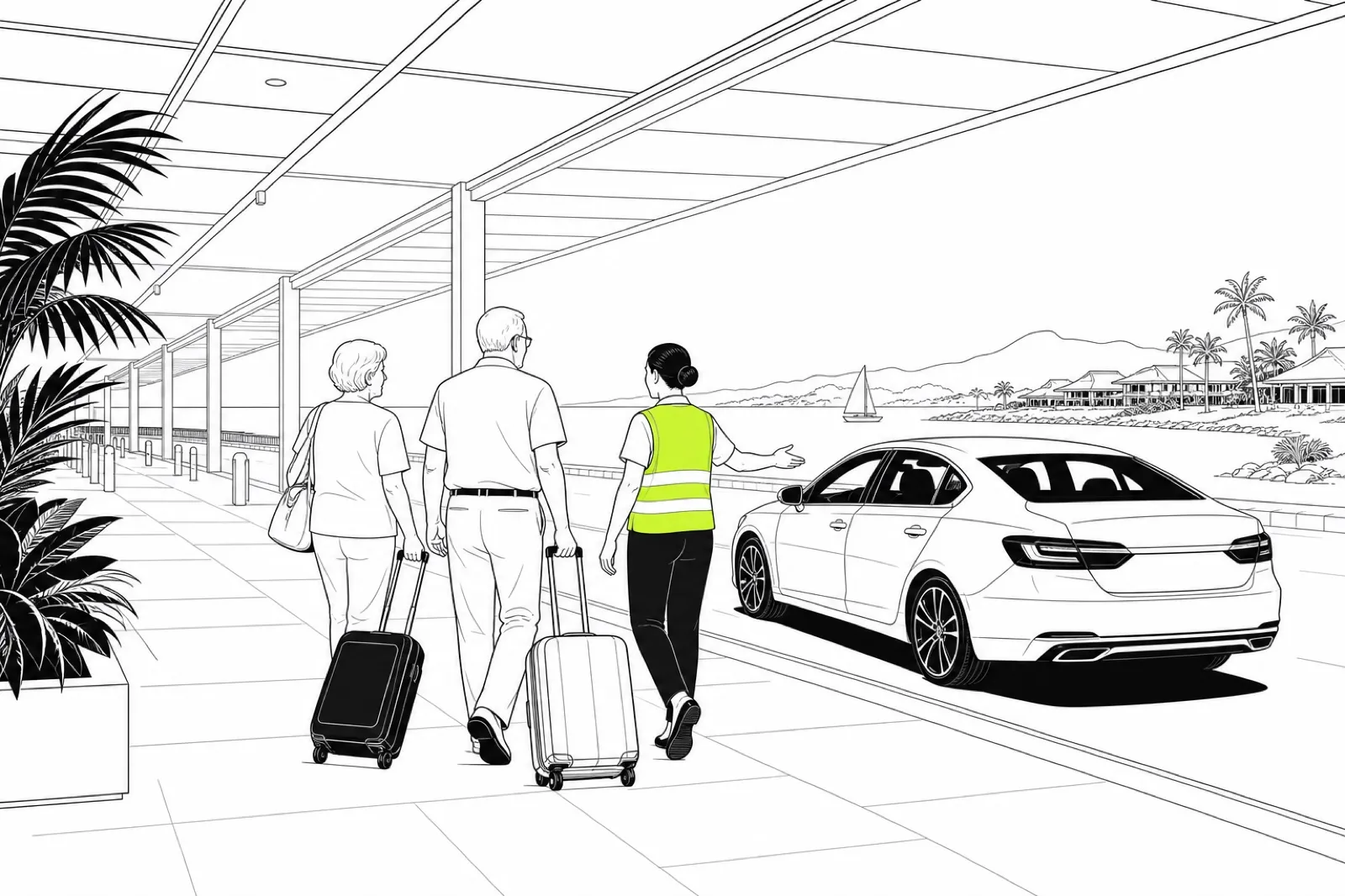
The first thing worth knowing about Cam Ranh is geography, not process: the airport sits a real distance from Nha Trang city, out along the coast, and that single fact shapes more of the arrival experience than anything happening inside the terminal.
From the aircraft to passport control
Cam Ranh’s international side handles a steady mix of package-holiday charters and regular scheduled flights, and the walk from the aircraft to immigration is straightforward — clear signage, a manageable distance, nothing that trips up a traveller paying attention. What does catch people is timing: charter flights from several source countries often land within a similar window, and a quiet corridor one moment can back up quickly once two or three aircraft empty into it at once.
Have your passport and any entry documentation already prepared through official government channels before you reach the counter. The officer reviews and decides for each traveller individually; nothing about a busy arrival changes that, only how long the line takes to move.
Baggage and customs, in short
Carousels here handle a fair share of resort luggage — beach bags, boxed duty-free, the occasional oversized item that took some negotiating at check-in. Screens overhead point you to the right belt, and the wait is set by ground handling on that particular flight rather than by anything in the hall. Once bags are in hand, Vietnam’s customs system is the same one used at every other international airport in the country: green channel for nothing to declare and within personal allowances, usually a quick walk-through; red channel for anything over that allowance, decided by the officer at the desk. Current allowance figures are published directly by Vietnamese customs.
Travellers moving a lot of luggage at once — a family reunion, a group with dive or golf gear — tend to find a porter genuinely changes the pace of this stretch; the wider case for that kind of help is covered in porter and baggage assistance.
The hall, and then the real journey begins
Push through the arrivals doors and you’ll meet a hall doing the usual job — drivers with name boards, hotel shuttle desks, families reuniting — but the more important decision has usually already been made before you flew: how you’re covering the distance into Nha Trang. This isn’t a short taxi hop from a city-edge airport; it’s a proper drive along the coast, and turning up without a plan means negotiating that trip cold, at arrivals, after a long flight. Sorting an airport transfer in advance, with a named driver and a fixed meeting point, removes that entire negotiation.
If your connection leaves you with hours to spare
Cam Ranh isn’t a major transfer hub, but travellers do occasionally land here on their way to a onward domestic hop with a gap of several hours between flights. The terminal has the basics — seating, food and drink counters, somewhere to charge a phone — but not much beyond that, so a long gap is genuinely long. If you’re facing that kind of wait anywhere in the country, the general guidance in surviving a long layover applies here as much as anywhere else.
Who tends to want help here
The distance to Nha Trang is the real variable at Cam Ranh, and it weighs differently depending on who’s travelling. An older parent flying to visit family, or anyone less confident negotiating a long drive with an unfamiliar driver in a foreign country, benefits from having that leg pre-arranged and escorted rather than improvised — a case laid out more fully in help for elderly travellers. For a traveller comfortable booking their own car and happy with a bit of uncertainty, Cam Ranh’s terminal itself poses few real obstacles; the airport is the easy part, and the road to the coast is the part worth planning for before you land, not after.